
Boise, Idaho
applied kinesiology in Boise.
Reviewed by Dr. Andrew Rostenberg, DC, DIBAK · Last reviewed
A diagnostic tool that uses manual muscle testing to evaluate how the body's structural, chemical, and neurological systems are functioning together, in real time, in the exam room, alongside lab work.
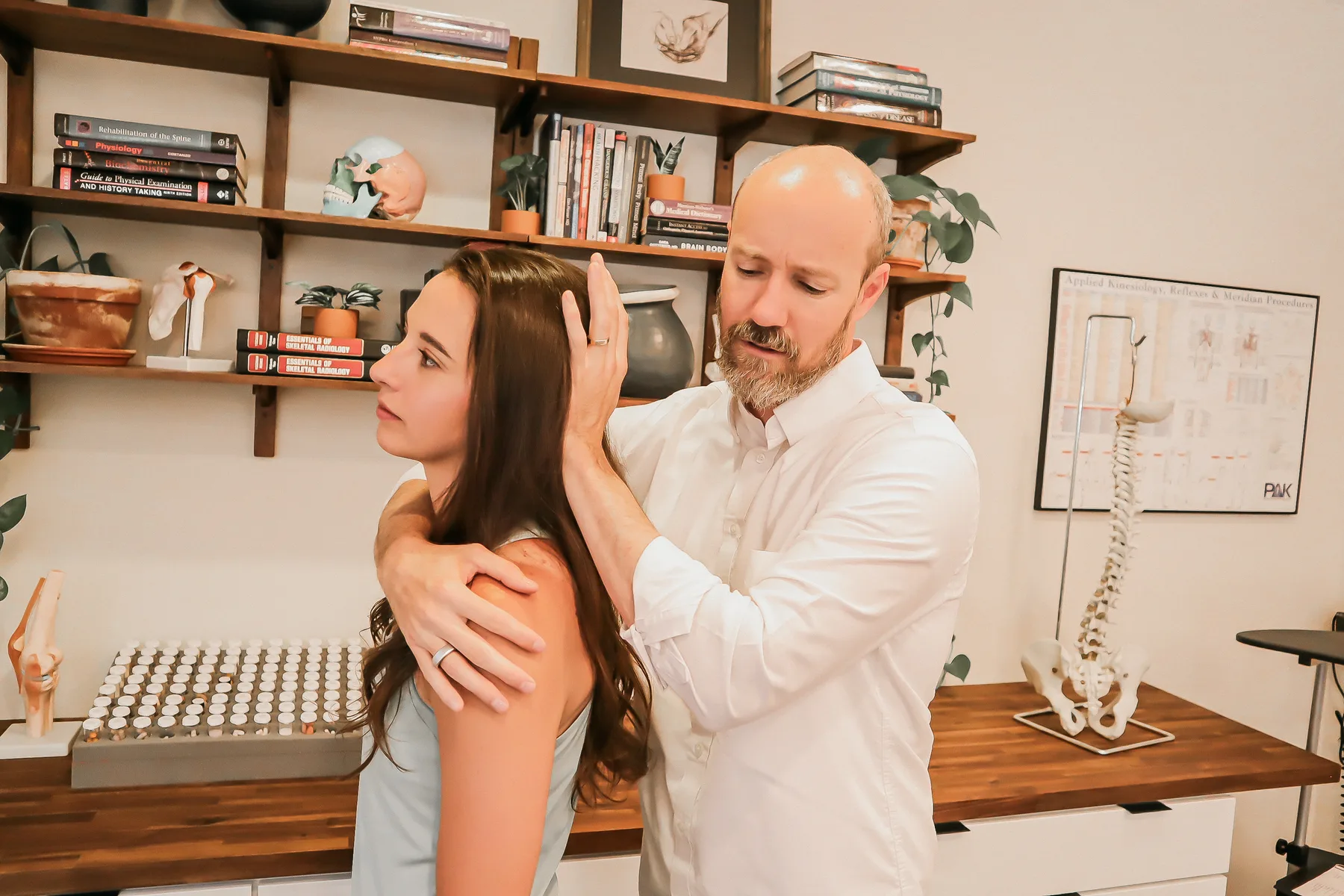
What applied kinesiology is.
Applied kinesiology (AK) is a system of clinical evaluation developed in the 1960s by Dr. George Goodheart. At its core: muscles function on demand from the nervous system. When something (a structural problem, a nutrient deficiency, an organ stress, an emotional component) interferes with that signal, the muscle tests differently.
A trained AK practitioner uses that response, alongside history, exam, and lab data, to triangulate where the problem is and what the body needs. It's not a diagnosis on its own. It's a tool that informs the diagnosis.
Why the certification matters.
The credential to look for is DIBAK: Diplomate of the International Board of Applied Kinesiology. It requires roughly 300 hours of advanced post-graduate education on top of a clinical doctorate, plus written and practical board examinations. There are only a few hundred DIBAK-certified practitioners in the world.
Dr. Rostenberg holds the DIBAK certification and has been integrating applied kinesiology into his functional medicine practice in Boise since 2011. That depth of training matters: AK done well is a precision tool. AK done poorly is just guessing.
How AK fits into your visit.
In your initial consultation, AK is one layer of the evaluation, not the whole evaluation. We start with your history and conventional examination, identify the root cause, then use AK alongside targeted lab work to confirm and refine.
In follow-up visits, AK is often where we test specific interventions (a supplement, a structural correction, a dietary change) to gauge how your body is actually responding before committing to a longer course.
Most patients find it remarkable to watch. None of it is mystical; it's a careful application of neurology, muscle physiology, and clinical pattern recognition.
What it does not replace.
AK is not a substitute for imaging, lab work, or specialist evaluation when those are clinically indicated. We use whichever tools the case calls for. AK is a powerful addition to that toolkit. It is not a replacement for any of the others.
What AK helps with
Conditions we treat with this approach
Applied kinesiology is one of the tools we use to find and address these patterns at the root.
- Injury Care & Back PainChiropractic + applied kinesiology for back, neck and joint injury recovery.
- Athletic PerformanceOptimizing recovery, power output and resilience for athletes at every level.
- Food Allergies & Leaky GutModified elimination protocols and gut barrier repair for chronic food reactions.
- Seasonal Allergies & HistamineHay fever, hives, sinus issues and histamine intolerance — without lifelong antihistamines.
- Complex Medical MysteriesWhen every test comes back normal but you still don't feel well — we love these cases.
- Wellness Annual Check-UpA comprehensive functional check-up — what your annual physical is missing.
See the full list of conditions we treat.
Common questions about applied kinesiology
- What is applied kinesiology?
- Applied kinesiology (AK) is a diagnostic technique that uses manual muscle testing to evaluate how the body is responding to specific inputs (a structural challenge, a nutrient, a food, a stressor). It is a clinical assessment tool, not a treatment in itself, and it works best alongside conventional history, exam, and lab testing.
- What does the DIBAK credential mean?
- DIBAK stands for Diplomate of the International Board of Applied Kinesiology, the highest credential in the field. It requires postgraduate coursework, supervised clinical hours, written exams, and a practical exam. Dr. Andrew Rostenberg holds this credential and is one of a small number of DIBAK-certified clinicians practicing in the Pacific Northwest.
- Is applied kinesiology used as the main diagnosis?
- AK is a diagnostic tool, not a treatment. We rely on it because it works in real time and communicates directly with the body, which helps guide the other diagnostic tools we use — history, structural and neurological exam, imaging, and laboratory testing. The more information we have, the better the picture becomes, and AK adds a layer the other tools can't deliver on their own.
Looking for a board-certified AK doctor?
Register as a new patient and we'll get you on the schedule.
Become a Patient